


Muah: Flirt, Chat & Connect
4.3113.00 Reviews
App Specs
- Version
- 1.0.4
- Updated On
- License
- Free
- Downloads
- 10,000+
- Developer
- WISERING PTE. LTD.
- Categories
- Social
- Platform
- Android
Screenshots



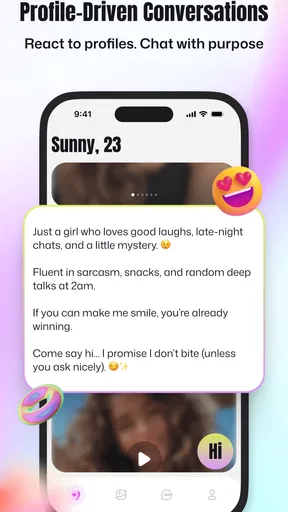

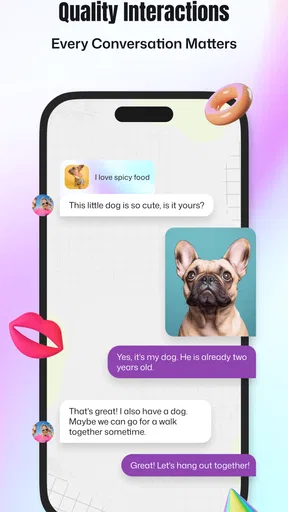
 Analysis by AppCompare
Muah: Flirt, Chat & Connect is the kind of social app I would open when I want to meet people nearby without turning the experience into a complicated project. Its focus is local singles, quick conversation, and the possibility of meeting in the same city, so the appeal is easy to understand: less browsing through distant profiles, more attention on people who could realistically become part of my everyday life. I tested it with that practical mindset, looking not only at the first impression but also at how well it supports a repeatable routine.
The app is free to install, although it includes optional purchases ranging from $0.99 to $499.99 per item. That wide range is worth keeping in mind before treating every in-app prompt as necessary. Muah is listed for mature users aged 17 and over, and it comes from WISERING PTE. LTD. Its current version is 1.0.4, with Android support beginning at version 8.0. Those details make it accessible to many older devices, but the mature rating also signals that this is not a casual children’s social network.
How I use Muah without wasting time
I keep each session purposeful: before opening Muah, I decide whether I have time to browse, reply, or simply check for a message worth answering. That small choice helps me avoid drifting through profiles and makes it easier to notice when a conversation is genuinely mutual. When a chat stalls, I let it rest instead of repeatedly reopening it; next, I look at a few simple setup checks that can prevent avoidable friction.
The basic local-discovery routine
My preferred starting point is simple: I open the app with a clear idea of what I want from the session. If I am only curious, I browse briefly and leave. If I am genuinely open to meeting someone, I spend more time reading profiles and starting conversations that have a natural reason to continue. That distinction matters because local dating apps can become tiring when every profile receives the same rushed message.
The most useful part of Muah is its local emphasis. Instead of treating distance as an afterthought, I approach each profile by asking whether a conversation could make sense outside the screen. Someone who lives in the same city may share familiar places, routines, weather, commuting problems, or weekend habits. Those small points are better conversation starters than a generic greeting, and they help me judge compatibility earlier.
I would not use the app as an endless stream to consume while bored. A better workflow is to browse a manageable number of profiles, choose only the people who genuinely interest me, and then give each chat enough attention to become more than a one-line exchange. This makes the experience feel less like collecting matches and more like deciding where to invest social energy.
What makes a first message work better
Muah’s short store description is simply “Muah,” while its broader purpose is much clearer once I start using it: discover local singles and begin flirty chats. That means the opening message has to do two jobs at once. It should show interest, but it should also give the other person an easy way to answer.
Worth Reading Before You Choose

Flipboard Shows What News Apps Must Do Beyond the Feed

Switching to Android Auto Means Rethinking Your Driving Routine

Google Calendar Makes a Crowded Week Easier to Manage

Ludo King Makes the Most of the Minutes Between Plans

Baby Panda World Brings Quick Play to Modern Phones, but Its Game Library Feels Busy

ESPN’s Live Game View Makes Following Close Games Easier
I get better results from a specific observation than from a compliment that could be sent to anyone. A reference to a listed interest, a question about a city routine, or a playful but respectful comment creates a small opening. I also avoid pushing immediately toward a meeting. The local angle is useful precisely because it gives a conversation time to develop before either person decides whether meeting is sensible.
One practical habit is to reread my own message before sending it and remove anything that sounds demanding. Flirting works better when the other person can respond comfortably. If the conversation becomes one-sided, repetitive, or uncomfortable, I stop rather than trying to force momentum.
A realistic everyday scenario
Imagine opening Muah after work on a weekday. I might have only a few minutes, so I would first check nearby profiles rather than starting a long browsing session. I would select one or two people whose profiles give me a genuine topic, send a short message connected to that detail, and then close the app. Later, if someone replies, I can continue from a real point instead of juggling a large group of shallow chats.
That routine is more sustainable than trying to be constantly available. It also makes the app useful for people who prefer gradual connections. A person who wants to meet someone in the same city can use the local focus to move from online conversation to a practical suggestion, such as a public café or another familiar place, when trust and interest have developed.
Settings and boundaries I would check first
Before becoming active, I would review every visible profile, discovery, notification, and privacy option rather than accepting the default experience automatically. I would pay particular attention to how much personal information appears publicly, how alerts are handled, and whether the app gives enough control over who can contact me or how I can disengage from a conversation.
I am careful with location-related information in any dating app. Local discovery is the central benefit here, but I would still avoid sharing an exact home address, workplace details, daily route, or predictable schedule in a profile or early chat. Saying that I live in a broad area is very different from identifying the building where I spend most evenings.
Notifications deserve a separate check. Frequent alerts can make a social app feel more urgent than it really is, especially when the goal is to meet people thoughtfully. I prefer notifications that help me notice a meaningful reply without turning every interaction into an interruption. If the available controls are limited, I would use the phone’s own notification settings to create quieter periods.
The best Muah habit is to control the pace before the app controls it for you. I would decide when to browse, when to reply, and when to pause. That simple boundary reduces impulsive spending, rushed disclosures, and the temptation to keep chatting with people who are not a good fit.
How I make conversations more efficient
Experienced use is less about finding a secret button and more about repeating a sensible process. I keep my profile honest and specific enough to give people something to discuss. I avoid trying to appeal to everyone, because a vague profile may attract more attention but usually creates weaker conversations. A clear indication of my personality and intentions helps filter the experience before messaging begins.
I also use a three-stage conversation pattern. First, I look for a shared point or an easy question. Next, I see whether the other person responds with similar effort. Finally, I decide whether the conversation is worth continuing or whether it is better to move on. This prevents a common dating-app problem: spending too much time trying to revive a chat that never had mutual energy.
Another useful shortcut is to keep questions open but not invasive. Asking what someone enjoys doing locally is more productive than asking for personal details. It can reveal lifestyle compatibility while allowing the other person to choose how much to share. If the answer is thoughtful, I can follow that thread. If it is vague or dismissive, I have useful information without an argument.
When the local focus is a real advantage
Muah makes the most sense for someone who values realistic proximity. If I am tired of conversations with people who live too far away to meet, a city-oriented approach removes one major source of wasted effort. It is also useful for someone who has recently moved and wants to meet people beyond a workplace or existing social circle.
The local angle can help with planning, but it does not guarantee compatibility. Two people can live close together and still want completely different things. I treat distance as a practical filter, not as proof that a connection will work. The strongest conversations still depend on mutual interest, communication style, and respect.
What I would not expect from the app
I would not choose Muah if I wanted a large, highly established dating ecosystem with extensive matching tools, detailed compatibility analysis, or a broad range of specialized communities. The app’s identity is more direct: local discovery and flirty conversation. Someone who prefers carefully structured questionnaires or a slower, relationship-first matching process may find a more traditional dating service easier to navigate.
I would also skip it if I wanted a completely anonymous social space. The local purpose naturally makes geography relevant, and meeting people nearby requires a degree of real-world context. That is useful for some users but uncomfortable for others. Anyone who feels pressured by proximity-based dating should choose an app with a different discovery model.
Understanding the paid side before spending
Muah is free to use at the entry level, but optional purchases are part of the experience. The listed purchase range runs from $0.99 to $499.99 per item, so I would never assume that a prompt is a minor add-on simply because the app itself costs nothing to download. I would read each purchase screen carefully, check what is being offered, and set a personal spending limit before experimenting.
This is especially important in a flirt-focused app, where excitement can make a paid action feel more urgent than it is. I would first test whether the free experience gives me enough meaningful interaction. If I am not enjoying the conversations without spending, paying more is unlikely to solve the underlying problem. Purchases should support a deliberate choice, not compensate for a weak connection.
For parents or guardians reviewing a device used by a younger person, the mature 17+ rating is relevant. The app is built around adult-style flirting and local social contact, so it should be treated differently from a general messaging tool. I would also consider device-level purchase protections if several people share the same phone or account.
Limits, safety, and the point where I move offline
Any app that helps strangers begin local conversations needs careful judgment from the user. I do not treat a friendly chat as proof of identity, and I avoid sending money, sensitive documents, private images, or information that could expose my home or workplace. If someone becomes controlling, asks for secrecy, or rushes toward an uncomfortable request, I end the conversation.
When a meeting feels appropriate, I choose a public place, tell someone I trust where I am going, and arrange my own way home. I also prefer a short first meeting rather than committing an entire day to someone I have only chatted with. These steps are not a criticism of Muah specifically; they are sensible boundaries for any local dating service.
There is another limit that affects the app’s usefulness: a local pool can feel different depending on where I live and when I use it. A large city may offer more variety, while a smaller area may produce fewer relevant conversations. I would give the app a fair trial through a consistent routine rather than judging it from one quiet session, but I would not keep using it indefinitely if the available community does not match my needs.
How Muah compares with familiar alternatives
Compared with broad social networks, Muah has a clearer romantic purpose. A general platform may offer more people I already know, but it can blur the difference between friendship, public posting, and dating. Muah is more focused when I want to signal that I am open to flirtatious conversation.
Compared with large dating apps, its strongest distinction is the emphasis on local singles and city-based interaction. Bigger services may provide more mature discovery systems, more recognizable user habits, or wider geographic reach. Muah can be preferable when I want a simpler route toward nearby conversation, but it may be less suitable for someone who wants extensive filters and a very deep pool of profiles.
Compared with anonymous chat apps, Muah has a more practical destination: potentially meeting someone in the same area. That makes conversations more grounded, but it also means I need stronger privacy habits. Anonymous platforms can feel lower-risk at first, while a local dating app can be more useful in the long run if I am ready to connect responsibly.
Who should try it and who should pass
I would recommend Muah to adults who want a straightforward way to discover nearby singles, enjoy light flirting, and decide gradually whether a conversation deserves an offline meeting. It is particularly appealing to people who dislike distant matches and prefer everyday compatibility questions over elaborate questionnaires.
I would be more cautious about recommending it to someone who dislikes messaging strangers, wants guaranteed serious relationships, or feels uncomfortable with location-oriented discovery. It is also not my first choice for users who need a highly structured matching system or who are unwilling to manage privacy and spending boundaries themselves.
The app has earned a 4.2 average from over 500 ratings, with more than 100 written reviews and over 10 thousand installs. Those figures suggest a modest but active footprint rather than the reach of a dominant social platform. I see that as a reason to approach it with realistic expectations: the quality of the experience will depend heavily on the people available in my area and on how deliberately I use the app.
My final verdict after building a repeatable routine
Muah: Flirt, Chat & Connect works best when I treat it as a focused local conversation tool, not as an endless entertainment feed. Its free entry point, direct social purpose, and nearby-single emphasis make it easy to understand. The app can help turn a city into a more relevant dating pool, especially when I use specific messages, keep my profile honest, and judge conversations by mutual effort.
Its weaknesses are equally clear. Local availability may vary, flirting can become repetitive, and the optional purchase range requires attention. The app cannot replace good judgment, and proximity alone does not create trust or compatibility. I also would not expect the depth of a long-established dating platform with extensive matching controls.
My recommendation is therefore conditional but positive: try it if nearby connections and relaxed flirting are what you actually want. Start slowly, review the visible settings, keep notifications and spending under control, and use a consistent browse-message-pause routine. Muah is most valuable when it helps me have fewer, better conversations rather than simply more conversations. For the right user, that focused approach is a genuine advantage; for someone seeking a highly structured or completely anonymous experience, another category of app will probably be a better fit.
Pros
- Quick sign-up makes it easy to start meeting people.
- Chat tools support casual conversations and ongoing connections.
- The interface is simple to browse and generally easy to understand.
- Profile discovery can help users find people with similar interests.
- Useful for users seeking both flirting and friendly social interaction.
Cons
- Some features may require a paid subscription or in-app purchases.
- The quality and authenticity of profiles can vary considerably.
- Users may receive unwanted messages or flirtatious interactions.
- Privacy settings should be reviewed carefully before sharing personal details.
- Activity levels may differ by location
- limiting potential matches.
FAQs for Muah: Flirt, Chat & Connect
What is Muah: Flirt, Chat & Connect, and how does it work?
Muah: Flirt, Chat & Connect is a social and dating-style app designed for meeting people, starting conversations, and building connections through profiles and messaging. After creating an account, users can browse available profiles, show interest, and chat with other members. The experience may vary depending on location, activity levels, and the information users choose to share.
Is Muah: Flirt, Chat & Connect free to download and use?
The app can generally be downloaded for free, but some features may require in-app purchases, credits, or a premium subscription. Basic access may allow account creation and limited interaction, while enhanced messaging, visibility, or other communication tools could be restricted. Before spending money, check the current pricing, renewal terms, and included benefits shown in the app store or inside the application.
Is Muah: Flirt, Chat & Connect safe for meeting and chatting with strangers?
Muah may include standard tools such as profile controls, reporting, blocking, and privacy settings, but no social or dating platform can guarantee that every member is genuine or trustworthy. Avoid sharing your address, financial details, passwords, or private documents. Be cautious of requests for money, suspicious links, or pressure to move conversations elsewhere, and report inappropriate behavior through the available channels.
Does Muah: Flirt, Chat & Connect require a real photo or personal information?
Registration may require basic details such as an email address, age, gender, or profile information, depending on the current version and sign-up method. Adding a photo and completing a profile can make it easier for others to understand who they are contacting, but you should only provide information you are comfortable displaying. Review visibility and privacy settings carefully before completing your profile.
Can I delete my Muah account or cancel a subscription?
You should be able to manage your account through the application settings or by contacting the platform’s support team, although the exact deletion process can vary by version. Uninstalling the app usually does not delete your account or stop a paid subscription. If you subscribed through Google Play or the App Store, cancel recurring billing in the relevant store settings and confirm that your account data has been removed if that is your intention.


